
|
General - How critical is water on the surface of the target I'm measuring?
General - My portable and online IR thermometers indicate different temperatures which one is right?
General - What is a two color instrument?
General - What is the effect of scale on the surface of steel?
Installation - Can I look inside of an oven and measure the target temperature?
Installation - Can IR instruments look through windows?
Installation - Can we see thru dust and smoke?
Installation - How critical is focusing the instrument?
Installation - What is the smallest target we can measure?
IR Theory - How does distance affect the IR instrument?
IR Theory - What is emissivity?
IR Theory - Will Color affect my measurement?
Line Scanner - How do you mount the ScanIR II sensor?
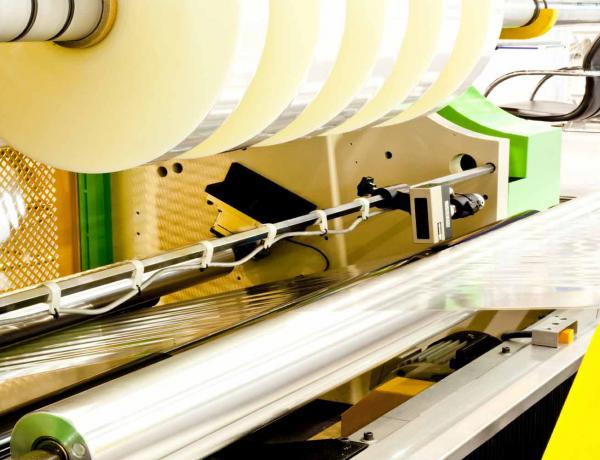
Line Scanner - How wide of a web can a ScanIR II measure?
Line Scanner - What operating systems will the Scan IR Software work with?
Service - How do I calibrate my instrument?
Service - How often should these instruments be calibrated?
Spot - How long of cable can I have?
Spot - What is a peak picker?
Spot - What is E slope?
Spot - What is the load rating on the relays for on off control?
Spot - Why does my instrument indicate to high of temperature?
Spot - Why does the instrument indicate too low of temperature?
General - How critical is water on the surface of the target I'm measuring?
Usually infrared thermometers cannot see through water so the instrument will measure the temperature of the water rather than the temperature of the target. You need to consider if the water would be at a higher or lower temperature then the actual target itself.
Return to top
General - My portable and online IR thermometers indicate different temperatures which one is right?
Usually the problem is emissivity. The portable is not the same wavelength as the on line instrument. You need to set the correct emissivity for both instruments...and it may not be the same value.
Return to top
General - What is a two color instrument?
This is an instrument that uses a detector that can detect two wavelengths while looking at one target. The instrument is often called a ratio thermometer because the temperature is measured by calculating the ratio between the two detector signals. This instrument has the advantage of not being affected by smoke and dust, dirty lens and the target not filling the resolved spot size.
Return to top
General - What is the effect of scale on the surface of steel?
If the scale is tightly bonded to the steel it will usually have no effect because it is the same temperature as the hot target. However, if the scale breaks loose it will cool and cause a cold spot on the target. If the instrument is a single wavelength instrument it will indicate a low temperature. If the instrument is a two color and only a portion of the spot is filled with the cold scale it usually will not affect the temperature indication.
Return to top
Installation - Can I look inside of an oven and measure the target temperature?
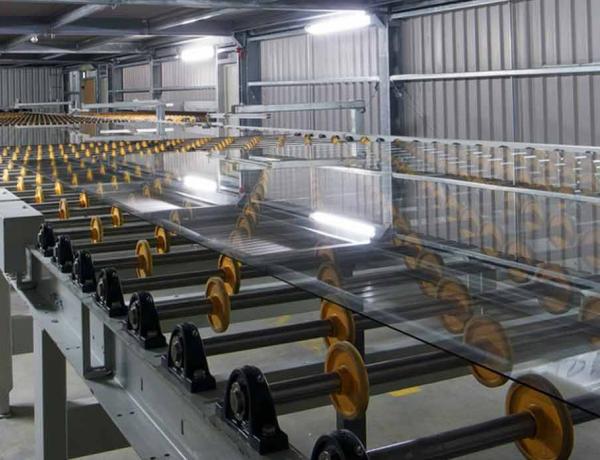
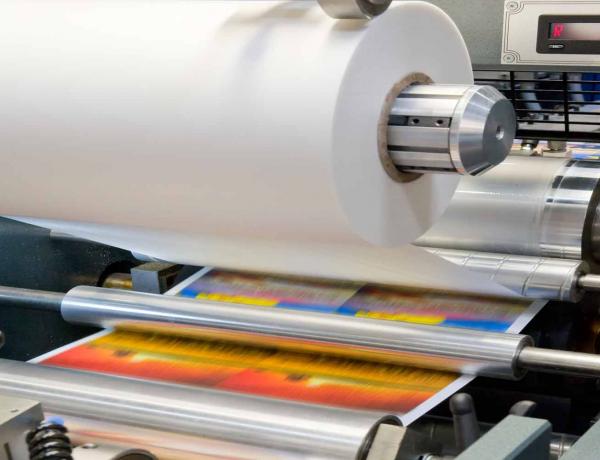
Yes, but you have to consider the problem of reflections. Usually the oven is hotter than the target. The target has some reflectivity so the thermometer measures the emitted energy as well as the reflected energy and indicates too high. This can be eliminated by using a sight tube, or possibly measuring the target at the exit of the oven. For glass, plastic films, and paper applications selection of the right thermometer can eliminate the reflection problem without a sight tube or looking at the exit of the oven. Contact Ircon.
Return to top
Installation - Can IR instruments look through windows?
Yes, the window has to be transparent for the wavelength of instrument you are using. For 1 to 2.6 microns we suggest quartz, for 3.4 to 5.4 microns we suggest Calcium Fluoride and for longer wavelengths please contact Ircon. If you are using a window for a vacuum furnace contact Ircon.
Return to top
Installation - Can we see thru dust and smoke?
No, the infrared thermometers cannot see thru these interferences.
However, in most industrial applications the dust and smoke are rising from the hot object and, if your eye was as fast as the IR thermometer you can see openings where the instrument has a clear line of sight. With the aid of a function called a peak picker the instrument can indicate the target temperature and ignore the cold readings caused by the dust and smoke.
Return to top
Installation - How critical is focusing the instrument?
All infrared thermometers have a specific target size they need to see in order to measure the temperature. The target should be 2 times the spot size in order to indicate the correct temperature. If the target is smaller than the spot the instrument will measure any thing that is filling the remainder of the target. This is not true of a two-color instrument.
Return to top
Installation - What is the smallest target we can measure?
Targets as small as 0.017 inches is possible. The limitation is the temperature and emissivity. As the temperature goes lower or the emissivity is lower then the instrument cannot go as small in spot size.
Return to top
IR Theory - How does distance affect the IR instrument?
As the instrument is placed further from the target the spot size resolved by the instrument becomes bigger therefore the target has to be large enough for the instrument to view it.
Return to top
IR Theory - What is emissivity?
All infrared thermometers are calibrated on a blackbody. A blackbody is a perfect emitter, meaning that it has an emissivity of 1.0. Everything else emits less than perfect and we say it has an emissivity factor.
For example, if the emissivity is 0.8 then it is emitting only 80% compared to a blackbody. The instrument will indicate too low in temperature until the emissivity value is put into the indicator. Setting the value at 0.8 is technically adding a 20% gain to the signal to make the instrument indicate the right temperature.
Return to top
IR Theory - Will Color affect my measurement?
For instruments that operate from the visible to 2.6 microns the color will usually change the emissivity. For wavelengths longer than 3 microns the color will not affect the emissivity. However, color does affect heating. Dark objects will get hotter than light colored objects.
Return to top
Line Scanner - How do you mount the ScanIR II sensor?
It is usually mounted above the web and in the center so that it equally scans the same amount from the center of the web.
Return to top
Line Scanner - How wide of a web can a ScanIR II measure?
The rule is for every 12 inches the sensor is above the web it can scan a 24 inch wide target. So at 48 inches the ScanIR could scan a 96 inch web.
Return to top
Line Scanner - What operating systems will the Scan IR Software work with?
The ScanIR can operate with Windows 2000 and Windows NT
Return to top
Service - How do I calibrate my instrument?
Infrared thermometers are calibrated on a standard called a Blackbody. It is suggested that most instruments be checked once a year.
Return to top
Service - How often should these instruments be calibrated?
It is common practice for instruments that have ISO calibration that the instruments be checked on a black body once a year.
Return to top
Spot - How long of cable can I have?
Most instruments can work with cables up to as long as 1000 feet without affecting the calibration. The cable length can be changed in the field
Return to top
Spot - What is a peak picker?
Most infrared thermometers have this function. There are many applications where the target is intermittent or there are intermittent interferences like steam and smoke. As the hot target fills the spot momentarily a peak is obtained. The peak picker holds this peak until another peak comes along. This allows the instrument to provide a continuous indication even though the target is intermittent.
Return to top
Spot - What is E slope?
On a two color thermometer the instrument relies on a ratio between two detectors. Often this ratio is affected by interferences that affect one wavelength and not the other like using Pyrex for a window instead of quartz. To correct the ratio a control is used to add a signal to one of the detectors to make it indicate the correct temperature. This correction is only needed to be set once for a specific application.
Return to top
Spot - What is the load rating on the relays for on off control?
24V DC @ 1 amp resistive or inductive
Return to top
Spot - Why does my instrument indicate to high of temperature?
You need to check for:
A. Incorrect emissivity
B. Is the instrument seeing reflections from a hot surrounding source
C. Is the instrument being affected by electrical noise entering into the cables or other wiring.
Return to top
Spot - Why does the instrument indicate too low of temperature?
You need to check for:
A. Incorrect emissivity
B. Dirty lens or window
C. The instrument is not focused correctly
D. The line of sight is blocked with an obstruction.
Return to top
|